

Imagine a vast microbiome city in your gut. This city has many inhabitants with different jobs – plumbers, doctors, and sanitation workers, among them. As long as the city’s microbiome system stays in balance, the city functions well. But if you take an antibiotic and get rid of all the sanitation workers, then the city becomes filled with trash because those workers have been eliminated. In a similar analogy, taking probiotics is like adding 1 million doctors every day and can throw the city out of whack, too. Any perturbation in the city has an effect on the rest of the microbiome and, consequently, you.
Your microbiome contains five specific components to promote health and ward off disease, including:
Diversity of Bacteria and Fungi in The Gut
A diverse gut microbiome, including the vast ecosystem of bacteria, viruses, fungi, and protozoa in your gut, leads to a more robust, adaptable immune system and improved resiliency of the microbiome. In the large microbiome city of your gut, the more diverse the population, the healthier it is. You wouldn’t want a city filled only with doctors or only plumbers.
Distribution of Bacteria and Fungi
The small intestine contains relatively few microbes. Since food reaches the small intestine right after the stomach, it gives the human body a first pass at nutrition, with enzymes brought in to break apart food for absorption into the body. Contractions of the intestine help keep things moving regularly through the small intestine, clearing food, bacteria, and water. In the city analogy, this is the more rural farming area.
The bulk of the gut microbiome is housed in the colon, the microbial city’s downtown. Any undigested material from the stomach and small intestine is processed in the colon with the help of microbes. The human body cannot digest some materials, such as fiber, with its own enzymes, and is broken down by microbes through a process called fermentation. Fermentation by microbes helps break down these materials into usable nutrients, like short-chain fatty acids. However, fermentation also produces gas and other molecules. The colon contractions get rid of gas, like a city’s subway system.
When bacteria overpopulate the small intestine, gas can become trapped, creating the hallmark symptoms of small intestinal bacterial overgrowth and disrupting digestion. In the microbiome city, this would be like 2 million people relocating to a small town in the rural outskirts of the city without the necessary infrastructure to support that many inhabitants.
Number and Composition of Bacteria
With thousands of varieties of bacteria, your microbiome has many different occupants to complete their specific tasks. A robust microbiome contributes to proper digestion and absorption of the foods you eat. Since we consume food throughout the day, we need great numbers of microbes in order to assist our digestive process. To continue our city analogy, five plumbers would not be enough to cover a big city.
Bacterial Output
The many inhabitants of your microbiome city produce a wide variety of products. Some are good, some are bad. For example, some bacteria have properties that reduce inflammation in the gut, and others support normal motility in the gut. On the other hand, gas and other chemicals produced by bacteria in the microbiome can contribute to symptoms of irritable bowel syndrome, such as diarrhea or constipation. It’s important to understand that bacteria do not always produce “good” or “bad” output. A balanced microbiome can assist in promoting positive bacterial output.
Resiliency
If you look at your microbiome after you take antibiotics, you will likely find the number of microorganisms is drastically reduced. Two weeks later, the bacteria repopulate your gut and the microbiome snaps right back to normal. That’s resiliency. However, if you continue to take courses of antibiotics, that could affect your microbiome. The microbiome is like an elastic band that becomes a little less stretchy every time you pull on it. It may not snap back quite all the way with too many rounds of antibiotics.
A productive city requires a variety of society members, resilience to change, and communal work products. Your microbiome requires the exact same.
Learn more:
https://pmc.ncbi.nlm.nih.gov/articles/PMC8001875/
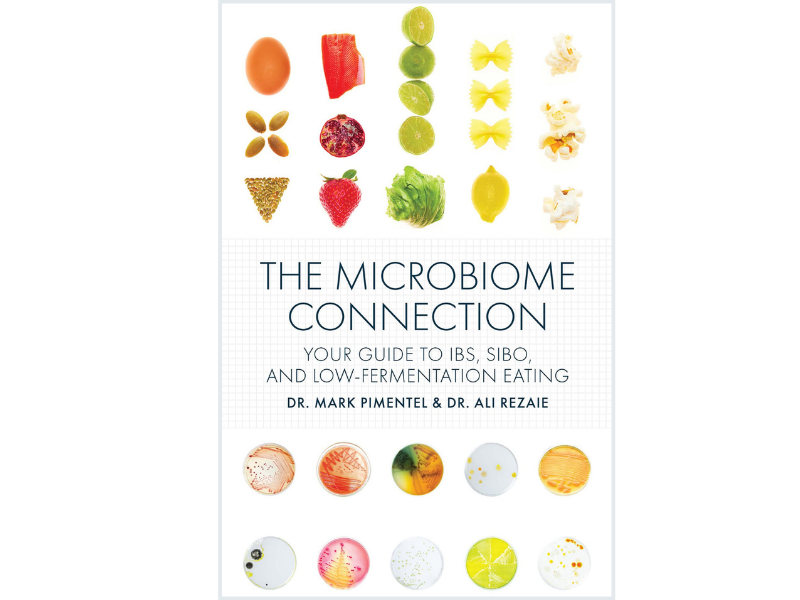
The Microbiome Connection: Your Guide to IBS, SIBO and Low Fermentation Eating
A must-have resource for anyone who suffers from IBS or SIBO, or who wants to better understand their microbiome, this book will help you live a gut-happy and gut-healthy life.